


未来智能网络与通信(FineCom)实验室,由毛奕婕博士于2021年9月创立。实验室专注于无线通信网络的研究,着力于未来6G无线通信网络的潜在关键技术。主要研究方向包括(但不限于):
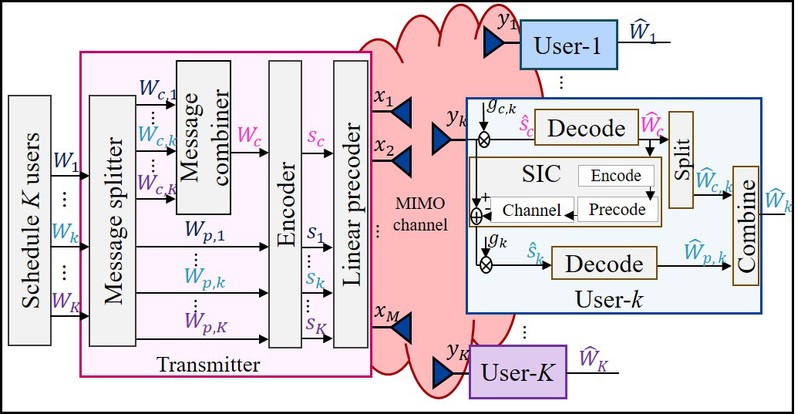
6G潜在新型多址接入技术,主要研究速率分拆多址接入(Rate-Splitting Mulitple Access, RSMA)的原理、架构和应用。
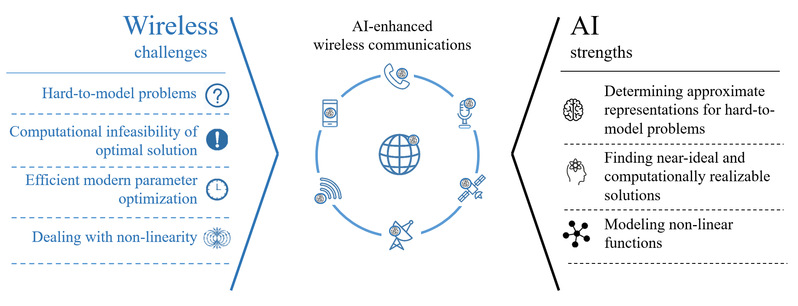
人工智能赋能6G无线通信网络(AI + 6G),主要研究使用机器学习和深度学习来设计高效的无线网络资源分配算法。使用无线网络赋能分布式机器学习、联邦学习。
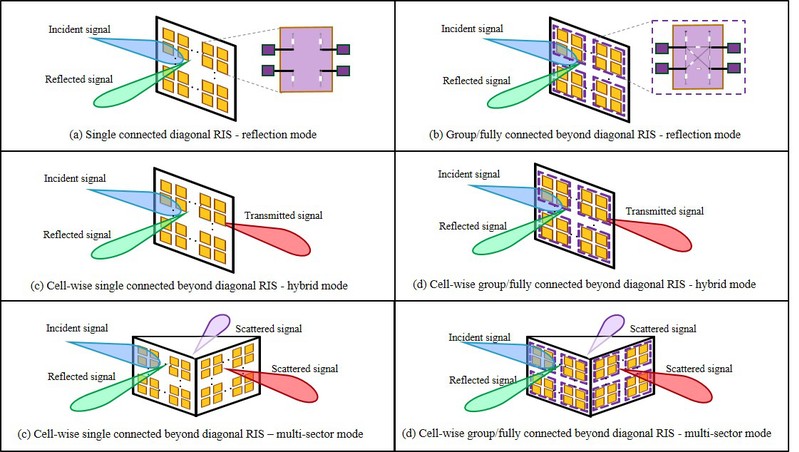
可重构智能超表面(Reconfigurable Intelligent Surface, RIS)辅助的无线网络,如相移设计、波束形成设计和信道估计。
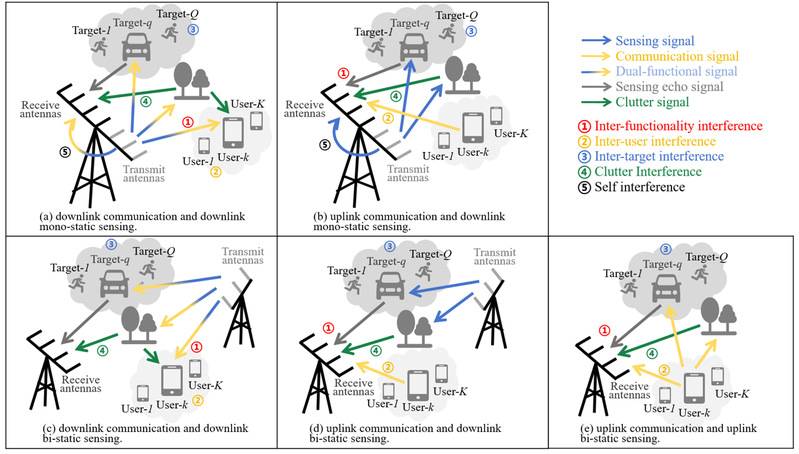
通信感知一体化网络(Integrated Sensing and Coommunication, ISAC),主要研究波形设计、干扰管理、资源分配。
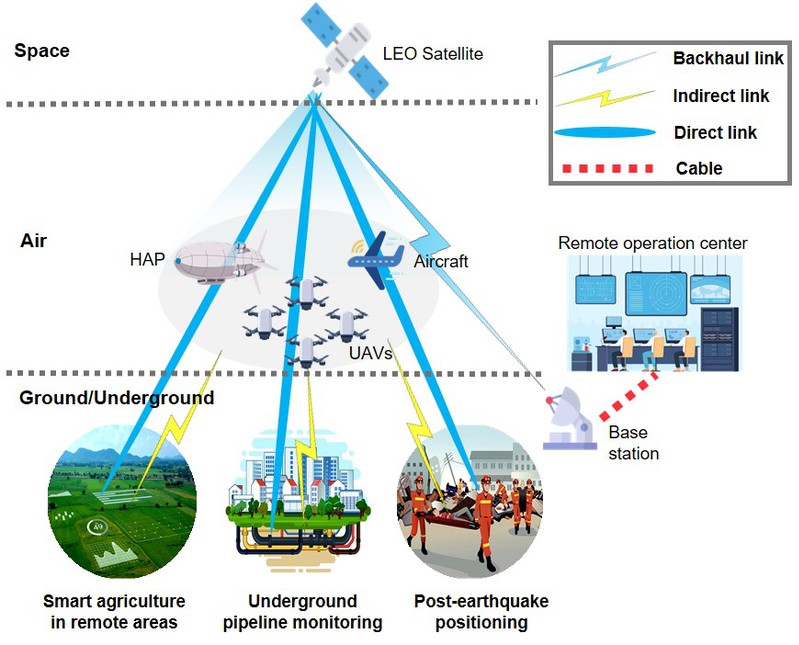
空天地一体化网络(Space-Air-Ground Integrated Network, SAGIN),主要研究干扰管理、用户调度和协同传输设计。
优化理论(Optimization Theory),主要研究系统的优化设计、优化控制、优化管理问题。
人工智能赋能6G无线通信网络(AI + 6G):
•6G for AI: Our focus is on utilizing advanced wireless technologies to enhance distributed and federated learning (FL) frameworks for AI applications. We have made contributions to cloud radio access network (Cloud-RAN)-based FL [6], [7], and RIS-assisted FL [8].
Our Related Works:
[1] Y. Wang, Y. Mao and S. Ji, RS-BNN: A Deep Learning Framework for the Optimal Beamforming Design of Rate-Splitting Multiple Access, in IEEE Transactions on Vehicular Technology, vol. 73, no. 11, pp. 17830-17835, Nov. 2024.
[2] S. Zhang, Y. Mao, B. Clerckx and T. Q. S. Quek, Interference Management in Space-Air-Ground Integrated Networks With Fully Distributed Rate-Splitting Multiple Access, in IEEE Transactions on Wireless Communications, vol. 24, no. 1, pp. 149-164, Jan. 2025.
[2] S. Zhang, Y. Mao, Z. Chen, B. Clerckx and T. Q. S. Quek, Federated Learning-Assisted Predictive Beamforming for Extremely Large-Scale Antenna Array Systems With Rate-Splitting Multiple Access, in IEEE Journal of Selected Topics in Signal Processing.
[4] S. Wang, J. Wang, Y. Mao and Z. Shao, Online Learning-Based Beamforming for Rate-Splitting Multiple Access: A Constrained Bandit Approach, ICC 2023 - IEEE International Conference on Communications, Rome, Italy, 2023, pp. 559-564.
[5] S. Zhang, S. Zhang, Y. Mao, L. K. Yeung, B. Clerckx and T. Q. S. Quek, Transformer-Based Channel Prediction for Rate-Splitting Multiple Access-Enabled Vehicle-to-Everything Communication, in IEEE Transactions on Wireless Communications, vol. 23, no. 10, pp.
12717-12730, Oct. 2024.
[6] J. Wang, Y. Mao, T. Wang and Y. Shi, Green Federated Learning Over Cloud-RAN With Limited Fronthaul Capacity and Quantized Neural Networks, in IEEE Transactions on Wireless Communications, vol. 23, no. 5, pp. 4300-4314, May 2024.
[7] Y. Shi, S. Xia, Y. Zhou, Y. Mao, C. Jiang and M. Tao, Vertical Federated Learning Over Cloud-RAN: Convergence Analysis and System Optimization, in IEEE Transactions on Wireless Communications, vol. 23, no. 2, pp. 1327-1342, Feb. 2024.
[8] WANG Yiji, WEN Dingzhu, MAO Yijie, SHI Yuanming. RIS-Assisted Federated Learning in Multi-Cell Wireless Networks[J]. ZTE Communications, 2023, 21(1): 25-37.
6G潜在新型多址接入技术
We focus on a novel multiple access technique known as rate-splitting multiple access (RSMA), which has emerged as a powerful strategy for multiple access, interference management, and multi-user communication in 6G and beyond. We have provided comprehensive tutorials and surveys on RSMA [1-4]. Our contributions include the design of RSMA, its integration with reconfigurable intelligent surfaces (RIS) [6], integrated sensing and communication [7], and visible light communications [8], etc. Additionally, we have investigated the optimal beamforming structure for RSMA [9].
Our Related Works:
[1] Y. Mao, O. Dizdar, B. Clerckx, R. Schober, P. Popovski and H. V. Poor, Rate-Splitting Multiple Access: Fundamentals, Survey, and Future Research Trends, in IEEE Communications Surveys & Tutorials, vol. 24, no. 4, pp. 2073-2126, Fourthquarter 2022.
[2] B. Clerckx et al., A Primer on Rate-Splitting Multiple Access: Tutorial, Myths, and Frequently Asked Questions, in IEEE Journal on Selected Areas in Communications, vol. 41, no. 5, pp. 1265-1308, May 2023.
[3] B. Clerckx et al., Multiple Access Techniques for Intelligent and Multifunctional 6G: Tutorial, Survey, and Outlook, in Proceedings of the IEEE, vol. 112, no. 7, pp. 832-879, July 2024.
[4] A. Mishra, Y. Mao, O. Dizdar and B. Clerckx, Rate-Splitting Multiple Access for 6G—Part I: Principles, Applications and Future Works, in IEEE Communications Letters, vol. 26, no. 10, pp. 2232-2236, Oct. 2022.
[5] Y. Wang, Y. Mao and S. Ji, RS-BNN: A Deep Learning Framework for the Optimal Beamforming Design of Rate-Splitting Multiple Access, in IEEE Transactions on Vehicular Technology, vol. 73, no. 11, pp. 17830-17835, Nov. 2024.
[6] T. Fang, Y. Mao, S. Shen, Z. Zhu and B. Clerckx, Fully Connected Reconfigurable Intelligent Surface Aided Rate-Splitting Multiple Access for Multi-User Multi-Antenna Transmission, IEEE ICC, 2022.
[7] K. Chen, Y. Mao, L. Yin, C. Xu, and Y. Huang, Rate-splitting multiple access for simultaneous multi-user communication and multi-target sensing, in IEEE Transactions on Vehicular Technology, vol. 73, no. 9, pp. 13909-13914, Sept. 2024.
[8] Z. Qiu, Y. Mao, S. Ma, and B. Clerckx, Robust max-min fair beamforming design for rate splitting multiple access-aided visible light communications, in IEEE Internet of Things Journal, (early access).
[9] T. Fang and Y. Mao, Rate splitting multiple access: Optimal beamforming structure and efficient optimization algorithms, in IEEE Transactions on Wireless Communications, vol. 23, no. 10, pp. 15642-15657, Oct. 2024.
可重构智能超表面(Reconfigurable Intelligent Surface, RIS)辅助的无线网络
Our research focuses on advanced reconfigurable intelligent surfaces (RIS) architecture design and leveraging RIS to enhance signal quality, improve coverage, and optimize resource management in next-generation wireless networks. We have introduced a novel RIS architecture called Q-stem connected RIS, which integrates features from existing single-connected, tree-connected, and fully connected beyond-diagonal RIS (BD-RIS)[1]. Additionally, we have explored advanced resource allocation algorithms for BD-RIS and investigated its diverse applications in 6G networks[2]—[7].
Our Related Works:
[1] X. Zhou, T. Fang, and Y. Mao,“A Novel Q-stem Connected Architecture for Beyond-Diagonal Reconfigurable Intelligent Surfaces, IEEE International Conference on Communications (ICC) 2025.
[2] K. Zhao, Y. Mao, and Y. Shi, Simultaneously transmitting and reflecting reconfigurable intelligent surfaces empowered cooperative rate splitting with user relaying, in Entropy, vol. 26, no. 12, 2024.
[3] C. Tian, Y. Mao, K. Zhao, Y. Shi, and B. Clerckx, Reconfigurable intelligent surface empowered rate-splitting multiple access for simultaneous wireless information and power transfer, IEEE Wireless Communications and Networking Conference (WCNC), 2023.
[4] T. Fang, and Y. Mao, A low-complexity beamforming design for beyond-diagonal RIS aided multi-user networks, in IEEE Communications Letters, vol. 28, no. 1, pp. 203-207, Jan. 2024.
[5] K. Chen and Y. Mao, Transmitter side beyond-diagonal RIS for mmWave integrated sensing and communications, IEEE 25th International Workshop on Signal Processing Advances in Wireless Communications (SPAWC), 2024.
[6] J. He, Y. Mao, Y. Zhou, T. Wang and Y. Shi, Reconfigurable Intelligent Surfaces Empowered Green Wireless Networks With User Admission Control, in IEEE Transactions on Communications, vol. 71, no. 7, pp. 4062-4078, July 2023.
[7] A. Mishra, Y. Mao, C. D’Andrea, S. Buzzi and B. Clerckx, Transmitter Side Beyond-Diagonal Reconfigurable Intelligent Surface for Massive MIMO Networks, in IEEE Wireless Communications Letters, vol. 13, no. 2, pp. 352-356, Feb. 2024.
通信感知一体化网络(Integrated Sensing and Coommunication, ISAC)
Our research focuses on developing joint frameworks for seamless integration of sensing and communication (ISAC) tasks, interference management, resource allocation, signal processing techniques, and leveraging AI/ML for real-time ISAC adaptation in 6G networks. We have contributed to multiple access design for ISAC [1]—[4], RIS-assisted ISAC [5], etc.
Our Related Works:
[1] K. Chen, Y. Mao, W. Shin, B. Clerckx, Multiple Access for Integrated Sensing and Communications, in: A. Kaushik (eds) Integrated Sensing and Communications for Future Wireless Networks: Principles, Advances and Key Enabling Technologies, Academic Press,
2025, Pages 349-379, ISBN 9780443221439.
[2] K. Chen, Y. Mao, L. Yin, C. Xu, and Y. Huang, Rate-splitting multiple access for simultaneous multi-user communication and multi-target sensing, in IEEE Transactions on Vehicular Technology, vol. 73, no. 9, pp. 13909-13914, Sept. 2024.
[3] L. Yin, Y. Mao, O. Dizdar and B. Clerckx, Rate-Splitting Multiple Access for 6G—Part II: Interplay With Integrated Sensing and Communications, in IEEE Communications Letters, vol. 26, no. 10, pp. 2237-2241, Oct. 2022.
[4] C. Xu, B. Clerckx, S. Chen, Y. Mao and J. Zhang, Rate-Splitting Multiple Access for Multi-Antenna Joint Radar and Communications, in IEEE Journal of Selected Topics in Signal Processing, vol. 15, no. 6, pp. 1332-1347, Nov. 2021.
[5] K. Chen and Y. Mao, Transmitter side beyond-diagonal RIS for mmWave integrated sensing and communications, IEEE 25th International Workshop on Signal Processing Advances in Wireless Communications (SPAWC), 2024.
空天地一体化网络(Space-Air-Ground Integrated Network, SAGIN)
Our research aims to develop unified frameworks that integrate satellite, aerial, terrestrial, and underground communication systems, enabling seamless and ubiquitous connectivity. We focus on optimizing resource management, mitigating interference, and leveraging emerging technologies like 6G and AI to enhance overall performance and reliability. Our contributions span several key areas, including interference management [1], distributed learning [2], and mobile edge computing within space-air-ground integrated networks (SAGIN) [3]. Additionally, we have designed a novel RIS-assisted transmission framework for the Internet of Underground Things [4].
Our Related Works:
[1] S. Zhang, Y. Mao, B. Clerckx and T. Q. S. Quek, Interference Management in Space-Air-Ground Integrated Networks With Fully Distributed Rate-Splitting Multiple Access, in IEEE Transactions on Wireless Communications, vol. 24, no. 1, pp. 149-164, Jan. 2025.
[2] Y. Wang, J. Zhu, Y. Mao, D. Wen, X. Tian and Y. Shi, Hierarchical Federated Edge Learning over Space-Air-Ground Integrated Networks, IEEE Globecom Workshops (GC Wkshps), Kuala Lumpur, Malaysia, 2023, pp. 190-196.
[3] Y. Huang, M. Dong, Y. Mao, W. Liu and Z. Gao, Distributed Multi-Objective Dynamic Offloading Scheduling for Air–Ground Cooperative MEC, in IEEE Transactions on Vehicular Technology, vol. 73, no. 8, pp. 12207-12212, Aug. 2024.
[4] K. Lin and Y. Mao, RIS-aided Wireless-Powered Backscatter Communications for Sustainable Internet of Underground Things, in IEEE Internet of Things Magazine, 2025.
优化理论(Optimization Theory)
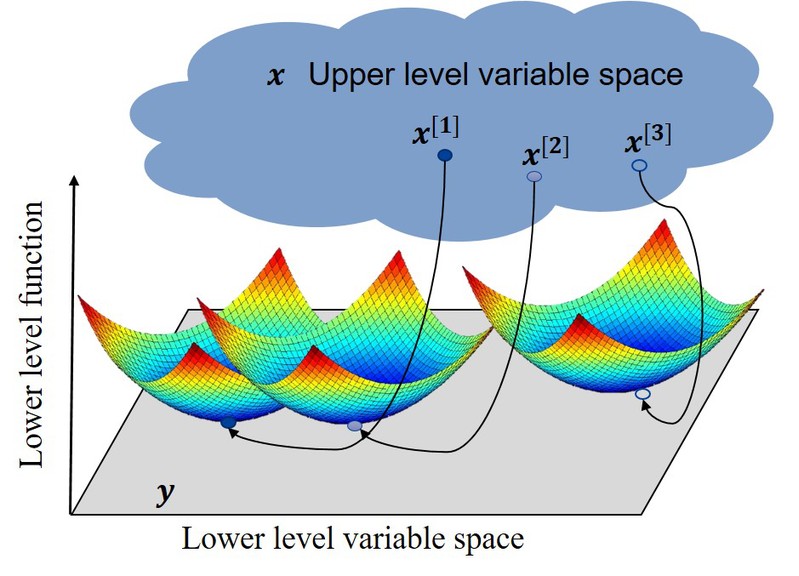
Our research spans a variety of directions, including convex and non-convex optimization, optimization in machine learning, stochastic and robust optimization, distributed optimization, multi-objective optimization, etc. We have developed a bi-level globalization strategy to ensure global convergence in non-convex consensus optimization [1], optimal beamforming structures for generalized multi-group multicast [2] and rate-splitting [3], [4], efficient optimization framework for BD-RIS-assisted multi-user multi-antenna networks [5], [6].
Our Related Works:
[1] X. Du, J. Wang, X. Zhou, and Y. Mao, A bi-level globalization strategy for non-convex consensus ADMM and ALADIN, arXiv:2309.02660 (2023).
[2] T. Fang, and Y. Mao, Optimal beamforming structure and efficient optimization algorithms for generalized multi-group multicast beamforming optimization, arXiv:2312.16559 (2023).
[3] T. Fang and Y. Mao, Rate Splitting Multiple Access: Optimal Beamforming Structure and Efficient Optimization Algorithms, in IEEE Transactions on Wireless Communications, vol. 23, no. 10, pp. 15642-15657, Oct. 2024.
[4] F. Luo and Y. Mao, A Practical Max-Min Fair Resource Allocation Algorithm for Rate-Splitting Multiple Access, in IEEE Communications Letters, vol. 27, no. 12, pp. 3285-3289, Dec. 2023.
[5] X. Zhou, T. Fang and Y. Mao, “Joint Active and Passive Beamforming Optimization for Beyond Diagonal RIS-aided Multi-User Communications,” in IEEE Communications Letters, 2025.
[6] T. Fang and Y. Mao, A Low-Complexity Beamforming Design for Beyond-Diagonal RIS Aided Multi-User Networks, in IEEE Communications Letters, vol. 28, no. 1, pp. 203-207, Jan. 2024.

 沪公网安备 31011502006855号